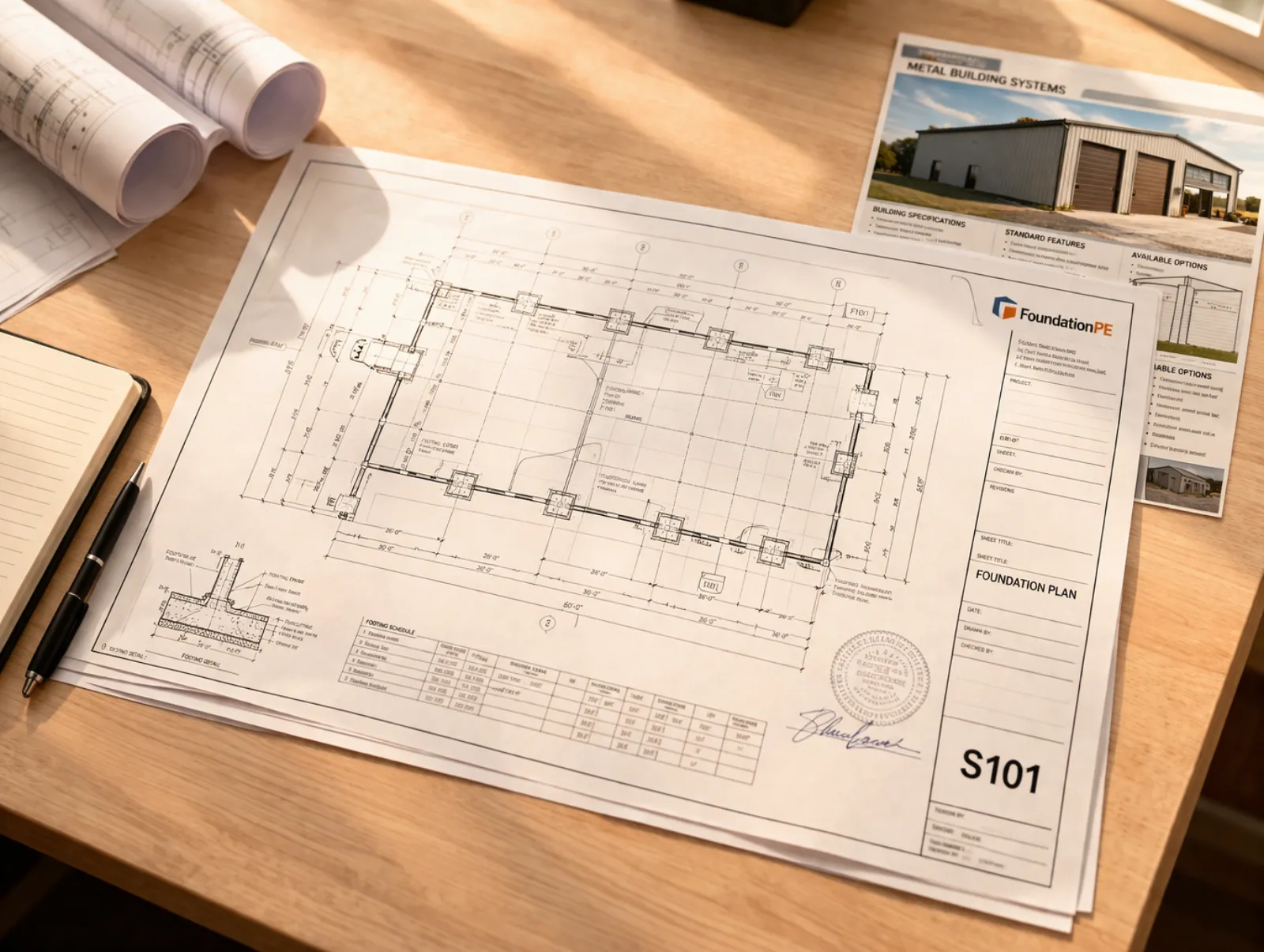
The 2024 International Building Code is now the governing code edition in the majority of U.S. jurisdictions. For metal building contractors, the updates that matter most are the ones that directly affect foundation design, load calculations, and permit review.
Here is what changed and what you need to know.
Updated Load Combinations and ASCE 7-22
IBC 2024 references ASCE 7-22 for minimum design loads and associated criteria. This is the standard that governs wind loads, seismic loads, snow loads, and the load combinations used to design every structural element including the foundation.
Wind load provisions in ASCE 7-22 include updated wind speed maps that reflect more recent meteorological data. Some regions saw increases in design wind speeds, which directly increases the lateral and uplift forces on foundations. If your project is in a coastal or high-wind zone, the foundation may need to be more robust than it would have been under the previous code edition.
Seismic design categories were also updated. Some sites that were previously in a lower seismic design category may now be reclassified to a higher one based on updated ground motion data. A higher seismic design category can trigger additional foundation requirements including more conservative overturning checks and additional anchorage detailing.
Soil-Related Provisions
IBC 2024 provides clearer guidance on presumptive soil bearing values and when a geotechnical investigation is required versus when code-prescribed values are acceptable. For standard metal building foundations where no geotechnical report is available, the code allows presumptive bearing values in the range of 1,500 to 2,000 PSF depending on the soil classification.
The updated provisions also include more explicit language around problematic soil conditions such as expansive clay, collapsible soils, and liquefiable soils. If the site has any of these conditions, the code is now more prescriptive about what additional investigation and design measures are required.
Why This Matters for Permit Review
Building departments are increasingly strict about code edition compliance. Submitting foundation plans designed to an older code edition — even if the differences are minor — is a common reason for review comments and resubmission requests.
Reviewers check that the correct code edition is referenced on the drawings, that load combinations match the current standard, and that the design parameters reflect the updated maps and tables. A plan set that references IBC 2021 or ASCE 7-16 in a jurisdiction that has adopted IBC 2024 will likely be flagged.
What You Should Do
If you are ordering foundation engineering for a metal building project, confirm that your engineer is designing to the current code edition adopted by the local jurisdiction. In most cases, this means IBC 2024 with ASCE 7-22 and ACI 318-19.
Ask specifically which code edition the plans will reference. If the answer is anything other than the current adoption, ask why and make sure there is a documented reason such as a jurisdiction that has not yet adopted the latest edition.
At FoundationPE, every package is designed to IBC 2024, ASCE 7-22, and ACI 318-19 unless the local jurisdiction requires a different edition. We track code adoptions by state and update our system as jurisdictions transition. When you order from us, the code compliance is handled automatically.